Uganda Birding Safaris

Uganda birding safaris give you access to over 1,000 recorded bird species across forests, wetlands, and savannah ecosystems, making Uganda one of Africa’s most diverse and rewarding birding destinations. Specialist guiding. Multiple habitats. All in one country.

Plan Your Uganda Safari

short forms

This field is required.

Why Choose Uganda for a Birding Safari

Uganda records over 1,080 bird species within its borders, across ecosystems ranging from the rainforest interior of Bwindi Impenetrable National Park and Kibale Forest National Park to the open savannah of Queen Elizabeth National Park, the Nile River wetlands of Murchison Falls National Park, and the highland forests of Mgahinga Gorilla National Park. This concentration of habitats within a compact geographic area makes Uganda one of the most species-efficient birding destinations on the continent.

What to Expect on a Uganda Birding Safari

Specialist Birding Guides

Uganda birding safaris are led by experienced guides with detailed knowledge of species distribution, calls, and behaviour across Uganda’s main birding habitats, from forest interiors to papyrus swamps and open savannah.

Multi-Habitat Itineraries

Birding itineraries are structured to cover multiple ecosystems within a single journey, combining forest birding in Kibale or Bwindi with wetland species along the Kazinga Channel and savannah birding across Queen Elizabeth National Park or Murchison Falls National Park.

Target Species
Focus

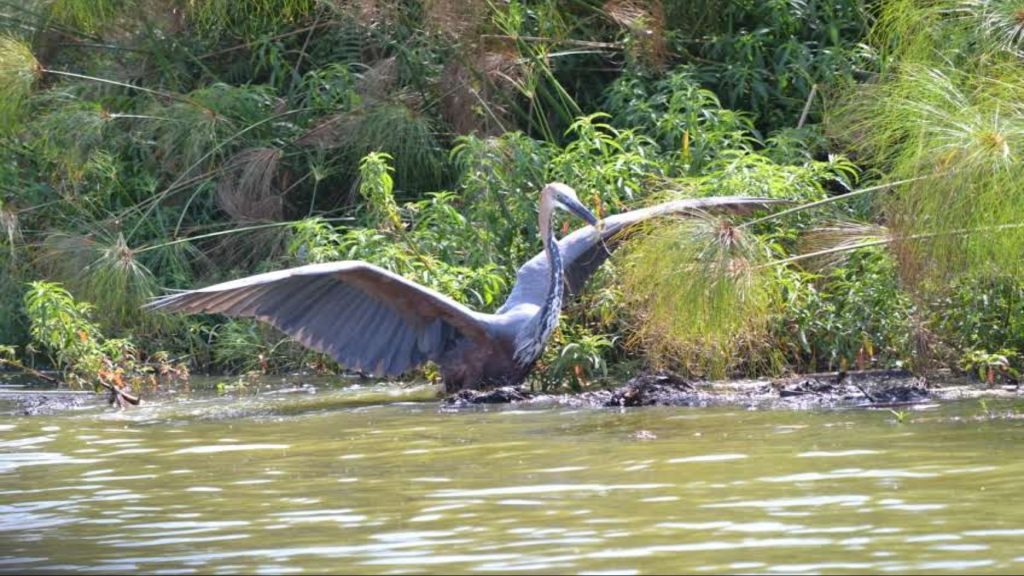
Uganda is one of the few countries where the Shoebill stork, African Green Broadbill, and Green-breasted Pitta can all be targeted within a single safari. Itineraries are built around confirmed target species alongside broad species diversity.

Top Parks for Uganda Birding Safaris

Uganda’s three most species-rich national parks cover distinct habitat types and together account for the majority of the country’s recorded bird species. These destinations form the core of most Uganda birding itineraries.

Queen Elizabeth National Park

Queen Elizabeth National Park records over 600 bird species, making it Uganda’s most bird-rich savannah destination. Key species include the African Skimmer, African Fish Eagle, and numerous water birds along the Kazinga Channel. The Maramagambo Forest within the park adds forest species to an already diverse list.

Murchison Falls National Park

Murchison Falls National Park records over 450 bird species across its river, savannah, and woodland habitats. The Nile River section is one of Uganda’s most reliable locations for the Shoebill stork, one of Africa’s most sought-after species. The Budongo Forest within the park adds forest birding alongside chimpanzee tracking.

Kibale Forest National Park

Kibale Forest National Park records 375 bird species within its rainforest interior, including the Green-breasted Pitta and African Pitta. Its dense forest habitat supports a range of species rarely encountered in open savannah parks, making it an essential addition for serious birders targeting forest endemics.

Birding Safari Tours

Combining Birding Safaris with Other Uganda Experiences

Uganda birding safaris naturally combine with gorilla trekking and wildlife experiences because the parks that hold the highest bird species counts are the same parks that anchor most Uganda safari itineraries. Bwindi Impenetrable National Park, while primarily visited for gorilla trekking, records over 350 bird species including 23 Albertine Rift endemics, making it a productive birding destination within a gorilla safari. Queen Elizabeth National Park and Murchison Falls National Park both support strong birding alongside game drives and boat safaris, allowing birding and wildlife activities to run across the same days without separate routing.

With Trek Safaris Uganda, birding itineraries are structured to integrate birding sessions into the natural flow of the safari day, early morning forest walks, boat safaris along the Kazinga Channel and the Nile, and guided wetland walks, without requiring a separate birding-only schedule.

Best Time for Uganda Birding Safaris

Uganda birding safaris are productive year-round, with species availability and conditions varying between the dry and wet seasons.

Dry Season (June - September and December - February)

The dry seasons provide good general birding conditions across savannah and wetland habitats. Vegetation is less dense, making species easier to locate and observe across open areas in Queen Elizabeth National Park and Murchison Falls National Park. Shoebill sightings along the Nile are reliable during these months.

Green Season (March to May and October to November)

The green season is Uganda’s best birding period. Migratory species are present from November through April, significantly increasing species counts across all habitats. Ecosystems are more active, breeding plumage is visible across many resident species, and forest birding in Kibale and Bwindi is at its most productive. Parks are quieter, and accommodation costs are lower.

Birding Safari Insight

For serious birders targeting maximum species counts, the green season is the recommended travel period. November to April combines resident species, Albertine Rift endemics, and Palearctic migrants within the same visit.

Plan Your Uganda Birding Safari

Tell us about your travel plans and our team will design a Uganda birding safari around your target species, preferred habitats, and available time.

Chat on WhatsApp WhatsApp Send us an Email Email